
Australian Online Pokies: Laws, Offers and Risks
 Available in AU
A practical guide to offshore-site legality, payment and offer conditions, and the checks that can help assess an online casino.

Table of Contents
- What Australian Law Means for Online Pokies
- Real-Money Play: The Risks That Change the Decision
- PayID Deposits: How the Transfer Works and Where It Can Fail
- No-Deposit Offers: Read the Conditions Before You Play
- Free Spins: Check the Cash-Out Cap
- Signup Bonuses: Calculate the Turnover Before Accepting
- Mobile Access and Responsible-Play Controls
- How Pokies Work Across Online Casinos
- What to Verify Before Trusting an Offshore Site
- New Pokies: What You Can and Cannot Infer
What Australian Law Means for Online Pokies
The legal position depends on who is providing the service. Under the Interactive Gambling Act 2001, a company must not offer real-money online pokies to people in Australia unless it holds a domestic licence. No licences of this kind have been issued, so there is no Australian-licensed online casino.
That prohibition applies to the operator’s conduct. It does not make an individual player criminally liable simply for accessing an offshore site that accepts Australian customers. The distinction is important: the fact that a player is not the target of the prohibition does not mean the operator is permitted to provide the service in Australia.
The law therefore separates two questions that are easy to confuse. One is whether a company may legally offer online pokies to people in Australia; the other is whether a player faces a penalty for playing. The Act restricts the company’s provision of the service, while the player is not the party it targets. Australians may legally play on offshore sites that accept them, but that does not turn those sites into Australian-licensed casinos.
Choosing an online pokies site means weighing the details that matter to you, including licensing, deposit minimums and payout information where available. Use this list as a starting point and check each operator’s terms before you play.
License: Curacao – Antillephone N.V. (Versus Odds B.V.) · Min. deposit: EUR 20 Thor Casino is listed with a Curacao–Antillephone N.V. licence, operated by Versus Odds B.V. Its stated minimum deposit is EUR 20.
License: Curacao, operated by Dama N.V. 7Bit Casino is listed as operating under a Curacao licence, with Dama N.V. as its operator.
License: Curacao Gaming Control Board OGL/2023/174/0082 (Dama N.V.) SpinsUp is listed with a Curacao Gaming Control Board licence, OGL/2023/174/0082, under Dama N.V.
License: Curacao eGaming OGL/2024/923/0383 (Antillephone N.V.) · Min. deposit: A$30 WinSpirit Casino is listed with a Curacao eGaming licence, OGL/2024/923/0383, issued through Antillephone N.V. Its stated minimum deposit is A$30.
License: Curacao · Payout speed: crypto 30-60 minutes, fiat 1-5 days · Min. deposit: A$10 Wild Tokyo lists a Curacao licence and a minimum deposit of A$10. Its stated payout times are 30–60 minutes for crypto and 1–5 days for fiat.
License: Curacao eGaming (Hollycorn N.V., since 2017) · Min. deposit: A$20-30 (depends on the offer) Playfina Casino is listed with a Curacao eGaming licence and Hollycorn N.V. as its operator since 2017. Its stated minimum deposit is A$20–30, depending on the offer.
License: Curacao · Min. deposit: A$20 (POLi) Lucky Dreams is listed with a Curacao licence. Its stated minimum deposit is A$20 when using POLi.
License: Curacao Gaming Authority (Jumpman Gaming Ltd) DragonSlots Casino is listed with a Curacao Gaming Authority licence, with Jumpman Gaming Ltd as its operator.
License: Curacao Gaming Control Board OGL/2023/176/0095 (Hollycorn N.V.) Rollero Casino is listed with a Curacao Gaming Control Board licence, OGL/2023/176/0095, under Hollycorn N.V.
License: Tobique Gaming Commission · Payout speed: crypto ~10-15 minutes, fiat 1-5 days · Min. deposit: A$30 SkyCrown is listed with a Tobique Gaming Commission licence and a minimum deposit of A$30. Its stated payout times are around 10–15 minutes for crypto and 1–5 days for fiat.
What “Australian-licensed” means
A domestic licence would be authorisation to provide the service under Australian law. An offshore operator may be based elsewhere or hold permission from another jurisdiction, but that is not an Australian licence. For online pokies, there is no local casino licence for an operator to obtain: none has been issued.
This means that “best Australian pokies online” cannot mean a choice among locally licensed online casinos. There is no such group. A site’s availability to Australian users, or its use of Australian-facing language, does not change that legal status. Nor does the word “licensed” by itself establish that a site holds permission to offer real-money pokies in Australia; the relevant question is whether there is a domestic licence, and none exists for online casinos.
The Interactive Gambling Act 2001 is the law that sets this framework. The Australian Communications and Media Authority (ACMA) is the primary domestic regulator responsible for enforcing it. Its role is directed at the legal rules governing providers, rather than creating an Australian licensing route for online casinos.
Reading the market accurately
When you encounter claims about Australian online pokies, separate the location of the player, the location or licensing of the operator, and the conduct the law prohibits. A site may accept Australians without being locally licensed. That acceptance describes the operator’s practice; it is not proof of Australian authorisation.
Likewise, the absence of a player penalty should not be read as approval of the operator’s service. The two points can both be true: the law targets companies that provide prohibited real-money online casino services to people in Australia, and individual players are not the target of that prohibition. Keeping them separate avoids treating a player’s legal position as evidence that a provider is authorised.
The practical starting point is therefore a narrow one: Australia has no licensed online casino, and the Interactive Gambling Act 2001 prohibits companies from offering real-money online pokies to people here without a domestic licence. Since none have been issued, there is no locally licensed online-casino market to compare. That legal distinction describes the framework; it does not certify or recommend any offshore site.

Real-Money Play: The Risks That Change the Decision
Playing pokies for cash changes the decision because a balance shown on an offshore site is not the same as money in your bank account. Deposits can leave your account before you know whether a withdrawal will be approved, what conditions will apply, or how long a payout may take. If the casino refuses to release winnings, you cannot rely on Australian legal channels to make it pay. That makes the operator’s decisions about your account and withdrawals a practical risk, not just a technical detail.
An offshore site may display a growing balance while your ability to access it remains conditional. A withdrawal can involve account checks, review of the payment method and compliance with the site’s own rules. A displayed win therefore does not establish that the casino will transfer the full amount, or that it will do so when you request it. Before depositing, read the withdrawal terms as carefully as the game information: they describe what the operator says it can do when you ask to receive your money.
Withdrawal Risk
If an offshore casino refuses to release your winnings, you cannot rely on Australian legal channels to compel payment.
A win may not arrive as one payment
Some casinos set a maximum amount that can be withdrawn over a week or a month. A specialist review reports limits in the range of $5,000–$10,000 for some operators; these are site-specific terms, not a standard that can be assumed to apply everywhere. The practical effect depends on the limit and the size of the balance. The same review describes a $50,000 jackpot becoming a payout stretched over multiple years under such a cap.
That kind of restriction matters even if the casino approves the winnings. The issue is not only whether a balance can be withdrawn, but also how much can leave the account during each period and whether the remaining amount stays subject to the operator’s rules. Check whether the stated cap applies to all withdrawals, only certain payment methods, or particular account types. If the terms are unclear, the amount displayed on screen cannot tell you what payout schedule to expect.
Verification can delay access
A first withdrawal may trigger identity checks. A specialist review says casinos can ask for a photo of identity documents and proof of address, and may also request a selfie in which you hold your identification. These checks can be part of the operator’s process before it releases funds. If you discover the requirements only when you request a payout, you may have to gather documents and wait for the site to assess them while your balance remains in the account.

Read the verification instructions before depositing and make sure you understand which documents the operator expects. Details on your account and documents may need to match; a mismatch can create questions that have to be resolved before processing continues. Do not assume that completing an account form means every withdrawal check is already finished. The important distinction is between having an online balance and having a payment approved for transfer.
Depositing can carry costs or be blocked
Payment access is not guaranteed either. A specialist review describes Australian banks and card companies as increasingly blocking transactions to known gambling sites. That is a reported trend, not a promise that every bank will block a particular payment. A declined transaction can prevent a deposit, while repeated attempts may not solve the underlying restriction. Check how your bank treats gambling transactions rather than assuming that a payment method accepted by a site will also be permitted by your card issuer.
There can also be a cost even when a card payment goes through. A specialist review warns that a bank or card issuer may classify a gambling deposit made with a credit or debit card as a cash advance. In that case, the transaction may attract a fee of 3–5% and interest from the time it is processed. The classification and charges depend on the issuer, so check its terms before using a card. The amount deposited is not necessarily the full cost of the transaction.
These risks are separate from the result of a spin. A win does not remove a withdrawal cap, complete identity checks or reverse a card fee. Nor does a successful deposit establish that a later payout will be approved. Treat the money you send as exposed to both payment rules and the offshore operator’s withdrawal process, and do not count a displayed balance as funds received.
Before Depositing Funds
- Read the withdrawal terms and any applicable payout caps
- Review the operator’s identity verification requirements
- Check how your bank treats gambling transactions and potential fees
- Confirm the minimum deposit amount required by the operator
PayID Deposits: How the Transfer Works and Where It Can Fail
PayID is an identifier for a bank account, not a separate balance that you load and spend. It works as an alias layer over Australia’s New Payments Platform (NPP): an email address, mobile number or Australian Business Number (ABN) can identify the account receiving a transfer. The NPP is supported by all major Australian banks, and transfers through it use end-to-end encryption.
For an Australian online pokies deposit, the key dependency is the link between your PayID and a bank account. You need to establish that link before using PayID to send money for real-money play. The alias identifies the account; it does not replace the account or remove the bank’s role in processing the transfer. If that account cannot send a payment to the recipient, selecting PayID at a payment screen will not resolve the problem.
The transfer therefore has separate stages: PayID provides an account identifier, the NPP carries the payment, and the receiving service must accept and credit it. A delay or rejection can occur at the bank or payment stage, while a successful transfer does not by itself tell you how the recipient handles deposits. Check the transaction status in your banking service and the payment instructions shown by the recipient before treating a deposit as complete.
Where a transfer can fail
A specialist review reports that some Australian banks, including members of the Big Four, sometimes block PayID payments to merchants identified as gambling businesses. This is not a universal setting that can be inferred from PayID itself; the outcome can depend on the bank’s controls and the recipient’s classification. A payment may therefore be rejected even when the PayID is linked correctly and the NPP is operating.
If a transfer does not go through, do not assume that repeatedly trying the same details will change the result. Check whether the bank declined it, whether the recipient’s payment instructions are current, and whether the account details match the intended destination. Use the bank’s own explanation for a declined payment rather than treating a failed transfer as evidence that PayID is generally unavailable.

The amount accepted is another separate condition. A specialist review describes minimum deposits at operators as commonly falling in the AU$10–AU$20 range, with some accepting AU$5. Those figures describe that review’s account of operator terms, not a limit built into PayID. The amount a bank transfer can carry and the minimum a recipient will credit are different questions: the latter is set by the recipient’s payment rules.
What PayID does—and does not—tell you
A PayID option indicates that a payment route is being offered. It does not establish the recipient’s licensing status, show whether a pokie uses a particular return setting, or prove how a site handles a disputed transaction. Those questions concern the recipient and the game, not the alias system or the NPP. Payment compatibility is not a substitute for checking the terms that apply to the service.
One specialist review says PayID receives the same treatment as other qualifying deposit methods at the sites it recommends. That is a statement about that review’s own selection and the terms it describes, not a feature that PayID guarantees across all merchants. Even where a deposit method is treated equally for site purposes, the bank can still apply its own payment controls.
PayID is also distinct from playing for free: it is a way to transfer funds, so it is not needed for a session that involves no deposit. Nor should its presence be read as evidence about other payment options. For instance, the fact that a service lists PayID does not establish that it accepts PayPal or explain the conditions attached to another method.
The useful way to assess an Australian PayID pokies payment is to separate the moving parts. Confirm that your PayID is linked to the bank account you intend to use; check the recipient’s current instructions and minimum; then distinguish a bank rejection from a recipient-side delay or crediting issue. None of those checks turns PayID into a guarantee about the service receiving the money.

No-Deposit Offers: Read the Conditions Before You Play
A no-deposit offer can look simple because it does not ask you to make a deposit first. That does not tell you how much betting is required before bonus winnings become withdrawable. The key figure is the wagering requirement: a multiplier applied to the amount named in the offer’s terms. The headline value alone is therefore not enough to judge the condition.
Read the rule that defines the calculation base. If the multiplier applies to the bonus amount, multiply that amount by the stated wagering requirement to find the required turnover. Turnover means the total amount you must bet, not the amount you must win. Repeated bets count towards that total; they do not guarantee a profit or ensure that a balance will last until the requirement is met.
For a simple illustration, a $500 bonus with a 40x requirement means $20,000 in bets must be placed before any winnings can be withdrawn. The relevant cost is not only the bonus’s advertised value. It is the amount of play required to satisfy the condition, while the outcome of each bet remains uncertain. You could reach the required turnover with a smaller balance, or lose the balance before completing it.
The multiplier needs context. A specialist review suggests looking for wagering requirements of 35x or lower and describes anything above 40x as punishing. Treat that as a review’s assessment, not a guarantee that a lower multiplier makes an offer worthwhile. A lower figure still requires substantial turnover relative to the bonus, and the calculation base matters: the same multiplier produces different turnover when applied to different amounts.
Before accepting an offer, locate the full terms and identify the exact bonus amount used in the calculation. Check whether the requirement applies to the bonus itself and how the operator defines completion. If the terms leave the calculation base unclear, you cannot reliably work out the turnover from the headline. A bonus code or “no deposit” label does not replace those details.
Calculating Turnover
Find the bonus amount and check if the multiplier applies only to the bonus or to the deposit plus bonus.
Locate the wagering requirement (e.g., 40x) in the offer’s terms.
Multiply the calculation base by the wagering requirement to determine the total amount you must bet before withdrawing winnings.
Also separate the requirement from the cash balance shown on screen. Meeting a wagering condition is a rule-based threshold, not a promise that you will retain winnings or be able to withdraw a particular amount. The offer may describe bonus funds and winnings differently, so read the wording that explains what becomes available once the requirement is complete. Do not assume that the displayed balance is all cashable.
A useful way to compare no-deposit offers is to write down the bonus amount, the multiplier, and the amount the multiplier applies to. Then calculate the required turnover before you play. If you cannot determine that base from the terms, the offer’s headline does not provide enough information to assess the commitment. A clear calculation makes the condition visible; it does not remove the uncertainty of betting or make the offer a source of guaranteed value.
Free Spins: Check the Cash-Out Cap
Free spins can produce winnings without requiring you to make a deposit first, but the amount shown in your account may not be the amount you can withdraw. A specialist review reports that some free-spin offers place a cap on cashable winnings. The cap is a separate restriction: it limits how much of the winnings from the offer can be paid out, even if the displayed balance is higher.
Before activating an offer, find the cash-out limit in its terms. Do not rely on the headline description or the number of spins alone. The key question is what maximum amount the offer allows you to withdraw from winnings generated by those spins. If the terms do not state that clearly, you cannot tell from the offer summary whether a win above the cap would be available to you.

Read the wording carefully. A cap may apply to winnings from the free spins rather than to every balance in your account. Check how the terms define the affected winnings and whether they describe a maximum cash-out amount. Avoid assuming that the cap is the same as a limit on the spins themselves: the restriction concerns the amount that can be cashed out, not necessarily the amount displayed while you play.
This distinction matters when you compare free-spin promotions. One offer may appear more attractive because it provides more spins, but that detail does not tell you how much you could withdraw if the spins win. Compare the stated cash-out condition as well. If the limit is low relative to the possible winnings, a larger result on screen may not translate into a larger payment.
Keep the cap separate from other offer conditions. A cash-out ceiling answers how much may be withdrawn from the relevant winnings; it does not, by itself, explain any other requirement attached to the promotion. Read each condition on its own rather than treating “free” as a complete description of what you receive.
A practical check is to locate the offer terms before you opt in, identify the cap, and confirm which winnings it covers. If the wording is unclear, ask the operator to explain it before playing and keep the response. Do not treat a balance display as confirmation that the full amount is eligible for withdrawal. The terms governing the offer determine whether a displayed win falls within the cash-out limit.
For Australian players considering free pokies online, the useful comparison is therefore not simply how many spins are offered. Check whether a cash-out cap applies and what the terms say it covers. That gives you a clearer view of the possible withdrawal from the promotion before you decide whether to use it.
Signup Bonuses: Calculate the Turnover Before Accepting
A signup bonus can look substantial while requiring far more betting than its headline value suggests. The key figure is the wagering requirement: a multiplier applied to an amount defined in the offer’s terms. For a bonus calculated on the deposit plus bonus, both amounts enter the calculation. That can make the required turnover much larger than if the multiplier applied to the bonus alone.

A specialist review uses a requirement of 35x or lower as a benchmark to look for and describes anything above 40x as punishing. Treat that as the review’s assessment, not a universal rule. The operator’s wording determines what must be wagered, and the multiplier alone is not enough to calculate the total.
For instance, a specialist review illustrates a deposit-plus-bonus offer with a $500 deposit and a $500 bonus. The qualifying total is $1,000; at 35x, the turnover requirement is $35,000 in bets before winnings can be withdrawn. The calculation is:
(deposit + bonus) × wagering multiplier = required turnover
This is turnover, not a target balance or a sum you must have available at once. It is the cumulative value of qualifying bets. Repeated bets can contribute to that total, while the balance may rise or fall as play continues. Meeting the turnover figure does not itself mean the account will contain money to withdraw.
Before accepting an online pokies welcome bonus, locate the exact clause defining the calculation base. Check whether the multiplier applies to the bonus alone or to the deposit and bonus together. Then check which games and bets count towards turnover, and whether any other conditions apply before a cash-out. If the terms do not clearly state the base, ask the operator to explain it in writing before opting in.
The multiplier often matters more than the headline amount because it scales the qualifying amount. A smaller bonus with a high multiplier can demand more turnover than a larger one with a lower multiplier. Compare offers by calculating the required bets from their actual terms, rather than judging them by the advertised bonus value. If the resulting requirement is not acceptable, declining the offer avoids taking on its conditions.
Turnover Calculation
Example: ($500 deposit + $500 bonus) × 35x multiplier = $35,000 required turnover.
Mobile Access and Responsible-Play Controls
A mobile layout changes how you reach an online service; it does not tell you what safeguards are available or how they work. An Australian pokies app may simply be a mobile-friendly website rather than a separate application, so check what the operator actually provides instead of assuming that a particular app or browser feature exists. Access from a phone is not evidence that the service offers effective controls.
Before creating an account or depositing, look for the responsible-gambling settings and read what each one does. Common tools include:
- Deposit limits, which restrict how much you can add to an account over a selected period.
- Loss limits, which restrict losses over a selected period.
- Session time limits, which set a boundary on time spent playing.
- Self-exclusion, which is intended to prevent access to gambling for a chosen period or longer, according to the operator’s terms.
These controls work differently. A deposit limit concerns money added, while a loss limit concerns money lost; neither is the same as a cap on time. Check when a limit takes effect, whether it can be changed immediately, and what happens to access when you choose self-exclusion. Do not treat a setting as active until the service confirms it.
Also check whether the settings are easy to find on the mobile screen and whether you can review them before play. If the control is difficult to locate, its name is unclear, or the terms do not explain its effect, do not assume it will restrict activity in the way you expect. A small screen can hide account settings behind menus, so verify the actual options rather than relying on a claim that a site is mobile-friendly.
BetStop is Australia’s self-exclusion register for licensed operators; it does not bind offshore sites. Do not assume that registering with BetStop will block access to an offshore gambling service. A site’s own self-exclusion option and BetStop are not interchangeable.
You must be at least 18 to gamble in Australia. If you are under that age, do not create an account or use a gambling service. For adults, decide on limits before opening a mobile session, and stop if you cannot keep to them.

How Pokies Work Across Online Casinos
A spin is a separate event, not the next step in a sequence. Each result is determined by a Random Number Generator (RNG). That means a previous win or loss does not make a particular result due on the next spin. A run of similar outcomes does not change the mechanism either: the next spin remains an independent random event.
This distinction matters when you compare Australian casino-style pokies online. A game’s familiar name, symbols and features do not by themselves tell you what return setting is active. A specialist review reports that some game providers let casinos choose between multiple RTP settings for the same pokie. As a result, the same title may have different stated return percentages at different casinos.
RTP, or return to player, describes a game setting; it is not a prediction of what an individual session will return. The setting does not promise that you will receive a particular amount, or that results will arrive evenly. Because spins are independent, short runs can differ from the return described by the setting. Treat that figure as information about the game configuration, not as a forecast for your next play.
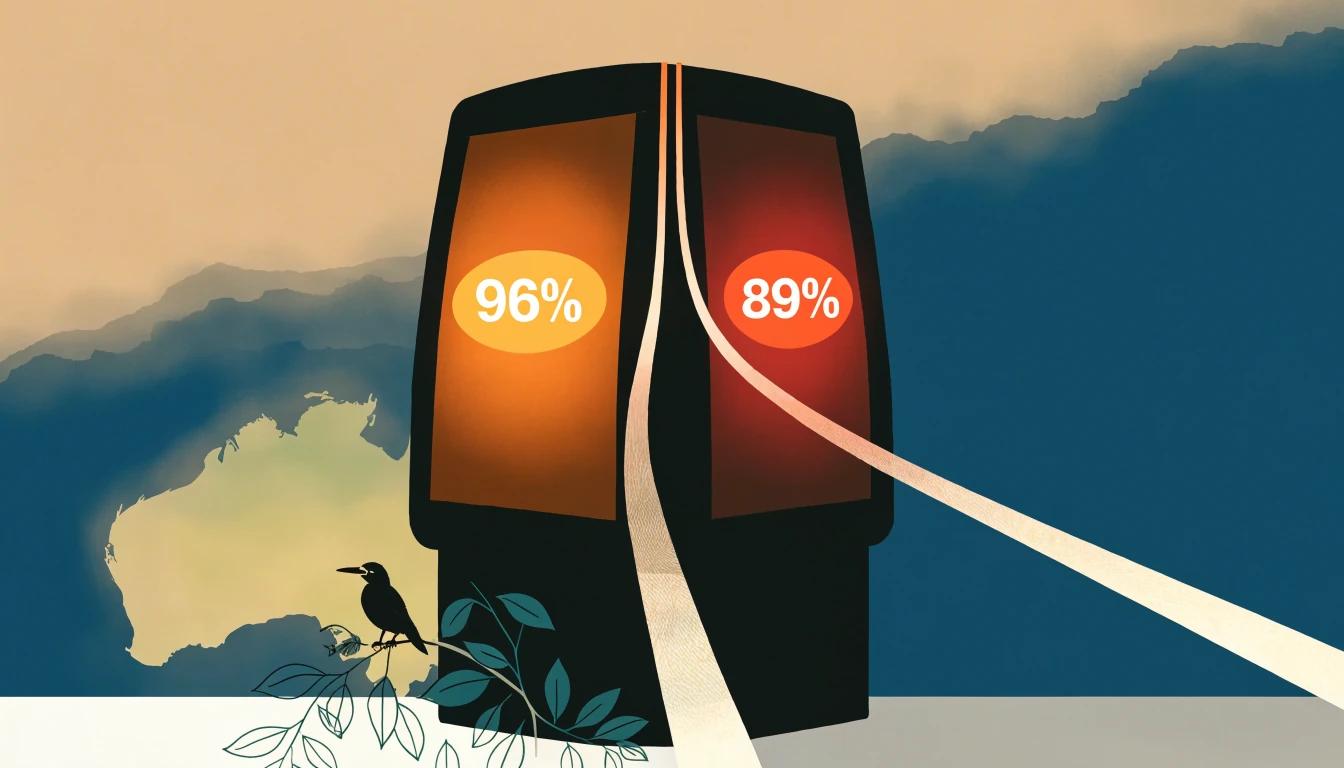
When comparing a particular pokie, check the information shown for that game at the casino where you are viewing it. If an RTP value is displayed, note which version it refers to. A game’s title alone may not identify its setting, and information attached to the same title elsewhere may describe a different configuration. If the setting is not stated clearly, you cannot infer it from the graphics, popularity or recent results.
The same reasoning applies to Australian pokies machines and their online versions: appearance does not reveal the result of an upcoming spin. A familiar theme may make two games look similar, but it does not establish that they use the same return setting or behave identically. Look at the game-specific information rather than assuming that a name or presentation settles the question.
The practical distinction is simple: randomness governs each spin, while the RTP setting describes a separate aspect of the game’s configuration. Neither tells you what the next result will be.
What to Verify Before Trusting an Offshore Site
A polished website or a page that loads successfully does not establish that an offshore operator is dependable. Access can change: the Australian Communications and Media Authority (ACMA) maintains a blocklist of illegal offshore gambling sites, and internet service providers must restrict access to sites on it. A site being reachable at a particular time is therefore not proof of approval, reliability or protection for you.

Consider what happens if a withdrawal is refused. Australian players have no legal recourse in Australia to compel an offshore casino to pay winnings. A site’s own complaint process may offer a route to raise a dispute, but it does not create an Australian legal remedy. Before depositing, read the withdrawal terms and identify the operator’s stated process for handling account or payout disputes. Treat those details as information about the site’s procedures, not as a guarantee that a disagreement will be resolved in your favour.
Check verification requirements before you play, not only when you request money. A specialist review reports that casinos may require identity checks before a first withdrawal, including images of an identity document and proof of address; it also notes that a selfie holding the document may be requested. Make sure you can provide the required documents and that the account details you enter are consistent with them. If verification is incomplete, a withdrawal request may be delayed while the operator asks for evidence.
Do not assume that BetStop will prevent an offshore site from accepting you or contacting you. BetStop applies to Australian-licensed operators; it does not bind offshore sites. If you rely on self-exclusion through BetStop, that boundary matters: it is not a control over an offshore account.
A useful check is to separate what you can observe from what it proves. A working website, detailed terms and a verification process describe access and the operator’s stated practices. None removes the risk that an offshore site may refuse a payout, nor gives you Australian legal recourse if it does.

New Pokies: What You Can and Cannot Infer
A recent release date tells you when a pokie became available; it does not tell you what return setting a casino has selected. New Australian pokies are still subject to the same distinction between a game’s identity and the version configured for play. A specialist review reports that some providers let casinos choose between multiple return-to-player (RTP) settings for the same game. As a result, seeing the same title at different casinos does not establish that its return percentage is identical at both.
RTP describes a theoretical return across play, not a promise about the result of a particular session. It cannot tell you what your next spin will do, and a newly released game does not become more predictable because it is new. Before drawing conclusions from a stated RTP, check that the figure applies to the version available at that casino. If the setting is not stated, the release date cannot fill in that missing detail.
The outcome of each spin is generated separately by the game’s Random Number Generator. Previous spins do not determine the next one, so a run of losses does not make a win due, and a recent win does not make another one less possible. That remains true whether a pokie has just launched or has been available for years.
Treat claims about new Australian online pokies accordingly: novelty is a release detail, not evidence of a higher return, a more favourable setting or a predictable result. The useful distinction is between what can be checked—the game’s stated RTP setting—and what cannot be inferred from its age: the outcome of an individual spin.
Do PayID deposits qualify for bonuses?
Yes, when PayID is listed as a qualifying deposit method. It is treated like any other qualifying deposit method.
Are online pokies legal for Australian players?
Yes, Australians can play on offshore sites that accept them, and individual players are not the target of the law. However, companies cannot legally offer real-money online pokies to Australians without a domestic licence, and none have been issued.
Can casinos change the RTP of their games?
Yes. Some game providers let casinos choose among different RTP settings for the same pokie, so check the game’s stated RTP at the casino you use.
Created by the ”Wildfortuneau.net” editorial team.